Word Smash
SATORISYS PLAYWord
4.6515.00 Reviews
- Version
- 1.5.6
- Installs
- 100.00K
- Age Rating
- Everyone
Screenshots
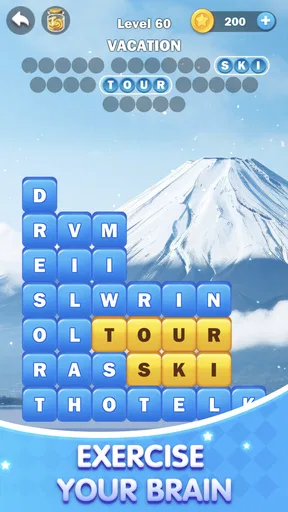
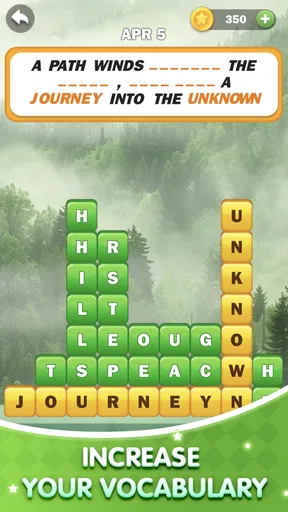
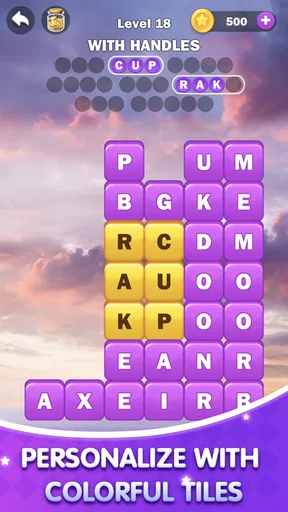
Our Review of Word Smash
 Analysis by Appyee
Word Smash is the kind of word game I can open for a quick break and still find myself playing several rounds later. Its basic appeal is easy to understand: it turns word-making into a fast, accessible challenge rather than asking me to learn a complicated set of rules. I found it most enjoyable when I wanted something light between tasks, especially because the game fits naturally into short sessions.
Developed by SATORISYS PLAY, this free title sits in the word-game category and is suitable for everyone. It has reached over 100 thousand installs, with a 4.6 average from around 8.3 thousand ratings and 456 written reviews. Those numbers suggest a healthy player response, but I still think the important question is whether its style matches the way you like to play. Word Smash is not trying to replace a serious vocabulary trainer or a long-form puzzle adventure. Its strength is quick entertainment built around words.
How Word Smash feels in everyday play
The first thing I noticed is how little commitment the game seems to demand. I do not need to set aside a quiet evening or remember a complicated campaign. It works better as a pocket-sized mental reset: a few minutes while waiting for a meeting, during a commute, or after finishing a routine task. That simplicity is a real advantage for casual players who want an activity that starts quickly.
At the same time, the word-game format gives those short sessions more substance than a completely passive distraction. I am still scanning letters, considering possible combinations, and deciding whether to use an obvious word immediately or spend more time looking for a better move. That small decision-making loop is what gives the game its staying power. The challenge is approachable, but it still asks me to pay attention.
I would describe the tone as playful rather than academic. If you enjoy spelling practice, vocabulary puzzles, or games that reward quick recognition, the design is likely to feel comfortable. If you prefer elaborate stories, deep strategy, or a large world to explore, this will probably seem too focused. Its identity is deliberately narrow: make the word challenge enjoyable and keep the action moving.
One useful way to approach it is to treat each session as a concentration exercise rather than a test of intelligence. I get more from the game when I stop trying to discover the perfect answer every time and instead pay attention to how quickly I recognize patterns. That makes it suitable for younger players and adults alike, although individual enjoyment will depend on vocabulary level and tolerance for repetition.
A good fit for short breaks
My favorite use case is a ten-minute gap that is too short for a film, too long to spend scrolling, and easy to fill with a few rounds. Word Smash gives that kind of pause a clear beginning and end. I can play until I feel refreshed, then put it away without needing to remember a complicated storyline or unfinished mission.
It also suits people who enjoy sharing a simple challenge with family members. Because the central idea is immediately understandable, one person can explain the appeal without a long tutorial. However, I would not choose it as a substitute for a dedicated multiplayer word competition unless the specific version on your device offers the interaction you want. The game’s strongest appeal, in my experience, is the personal challenge of finding words efficiently.
For parents, the Everyone age rating makes the game broadly approachable. I would still recommend checking how a child responds to the in-app purchase prompts and setting device controls where appropriate. A friendly age rating does not automatically mean every family will want unrestricted access to optional spending.
What the current release tells me
The current version is 1.5.4, and the game was released on February 5, 2025. That places it in a relatively early stage compared with long-established word titles that have accumulated years of modes, events, and refinement. I see that as both an opportunity and a limitation. The experience can feel focused, but players looking for a huge amount of accumulated content may find a mature competitor more satisfying.
The version number matters because it gives existing users a useful point of reference. Anyone who played an earlier release should compare the current behavior on their own device after updating, particularly if they care about interface changes or the feel of progression. I would not assume that a new version automatically changes the core experience. In a word game, small adjustments to pacing, presentation, or challenge balance can matter more than a dramatic new feature.
For new players, the current build is the one that should shape the decision. I would judge it on how smoothly it starts, how readable the word challenges feel, and whether the available variety keeps me interested beyond the first few sessions. The release date and version show where the product is in its development, but they do not by themselves guarantee that it will suit every player.
There is also a practical point about compatibility. The minimum operating-system requirement is Android 7.1, so the game remains accessible to people using older supported Android devices. That is helpful if you are not carrying a recent phone, although performance can still vary between devices. A game that works on an older operating system may not feel equally comfortable on every older handset, especially if the screen is small or the device struggles with modern apps.
How the design affects returning players
For someone already playing, the main benefit of a focused word game is predictability. I know what kind of mental activity I am getting when I open it. That makes it easy to build into a daily routine: one session with morning coffee, a short round during a break, or a few challenges before bed. The downside is that predictability can become repetition if the available variety does not keep pace with the player’s familiarity.
My practical advice for returning players is to vary the way you approach each session. Instead of always chasing speed, try prioritizing unusual words, reducing careless moves, or treating a round as a vocabulary warm-up. This does not create a new mode, but it can make the existing challenge feel less automatic. It also helps reveal whether your interest comes from genuine word play or simply from the novelty of the first few sessions.
Another useful habit is to stop before the game becomes tiring. Word puzzles lose much of their charm when I continue playing after my attention has faded. Shorter sessions make the challenge feel sharper and reduce the sense that I am repeating the same action just to fill time. That is especially important for players who are easily drawn into “one more round” loops.
Existing users should also remember that optional purchases are part of the experience. The listed in-app items range from $1.99 to $4.99 each. I would treat those purchases as conveniences or extras rather than necessities and decide in advance whether they add enough value to justify the cost. If you prefer games with no spending prompts at all, even a free download may not feel completely frictionless.
Where it stands beside familiar alternatives
Compared with a traditional crossword app, Word Smash feels more immediate and less dependent on sitting down with a large grid. Crosswords are better when I want clues, deduction, and a slower sense of completion. This game is better when I want to work directly with words and keep the interaction compact. Choosing between them comes down to whether you enjoy rapid recognition or layered clue solving.
It also differs from dictionary-focused vocabulary apps. Those tools usually make learning the primary goal, with definitions, review systems, or structured lessons. Word Smash is more recreational in spirit. I may notice new words or become more alert to spelling patterns while playing, but I would not use it as my only method for building vocabulary. For serious language study, a dedicated learning app remains the stronger choice.
Against large word-game platforms, the appeal here is simplicity. Established alternatives may offer more social features, extensive leaderboards, themed events, or several puzzle styles in one package. That breadth can be valuable if you want a long-term hobby with constant variation. Word Smash is more attractive if you would rather avoid a crowded interface and focus on a straightforward word challenge.
There is a trade-off in that simplicity. A player who enjoys collecting achievements, comparing detailed statistics, or moving through a substantial progression system may quickly prefer a more feature-heavy competitor. I would recommend this game to someone who values accessibility over depth, not to someone shopping specifically for the largest possible word-game ecosystem.
Small techniques that improve the experience
My first tip is to avoid committing to the first familiar word you see. Fast recognition is useful, but pausing briefly to inspect the remaining letters can lead to a more satisfying result. This is not about playing slowly; it is about preventing the game from becoming a reflex exercise with no thought behind it.
Second, use the game to identify your personal blind spots. I tend to notice common nouns quickly but hesitate when a word uses an unusual ending or a less familiar letter pattern. Paying attention to those moments gives each session a little more value. I can carry that awareness into other word puzzles instead of treating every round as an isolated score.
Third, separate entertainment goals from improvement goals. If I am tired, I play for relaxation and accept imperfect decisions. If I am alert, I use the session to test recognition speed and patience. This simple distinction prevents me from judging the game unfairly when what I really need is a break rather than a challenge.
Finally, I would recommend trying the game without immediately buying anything. The free version is the sensible way to learn whether the pacing, word selection, and repetition level work for you. Only after several sessions would I consider an optional purchase, and even then I would ask whether it changes my enjoyment or merely removes a temporary inconvenience.
Limitations worth considering
The biggest potential weakness is longevity. A compact word game can be very appealing at first, but its long-term value depends heavily on how much variety the player feels over time. If you need a constant stream of new systems, social competition, or narrative rewards, the focused format may begin to feel thin.
There is also a difference between being accessible and being equally satisfying for everyone. Beginners may appreciate the approachable structure, while experienced word-game players may want tougher vocabulary, more strategic choices, or clearer ways to measure improvement. I would not assume that a high average rating means every skill level will receive the same amount of challenge.
The free-to-play structure may create another point of friction. Optional purchases between $1.99 and $4.99 are not unusual, but players who want a completely uninterrupted experience may prefer a paid game with a single upfront cost. On the other hand, the free entry point makes it easier to test Word Smash before deciding whether it deserves a place on your phone.
I would also skip it if your main goal is structured education. The game can encourage attention to spelling and word patterns, but it should not be confused with a course, dictionary, or personalized language program. Likewise, people who dislike timed-feeling pressure or repeated puzzle loops may find a slower crossword or an untimed word search more comfortable.
What I would watch as the game develops
Since the current release is still at version 1.5.4, I would be interested in how SATORISYS PLAY handles the balance between simplicity and freshness. The best future direction would preserve the quick start while giving returning players meaningful reasons to come back. New challenge variations, clearer progression, or thoughtful accessibility improvements could add depth without turning the game into a cluttered platform.
I would also watch how the developer treats the relationship between free play and optional purchases. A good balance lets players enjoy the central word challenge without feeling pushed toward spending. That matters particularly for families and for casual users who downloaded the game because it was free.
For current players, updates are worth judging by their effect rather than by their size. A small refinement that improves readability or pacing can be more valuable than a large addition that makes the game harder to navigate. I would pay attention to whether new releases make sessions feel more varied while keeping the straightforward character that makes the title approachable.
My recommendation
Word Smash is strongest as a quick, friendly word-game break. I like it for short sessions, casual vocabulary practice, and moments when I want something more engaging than scrolling but less demanding than a full puzzle app. Its free entry point, Everyone rating, and support for Android 7.1 make it easy for a broad audience to try.
I would recommend downloading it if you enjoy fast word challenges and prefer a focused experience over a feature-heavy alternative. I would be more cautious if you need deep progression, competitive social tools, formal language learning, or a guaranteed supply of complex puzzles. In those cases, a dedicated crossword, vocabulary trainer, or established multiplayer word platform may be a better match.
Overall, I see this as a promising early-stage word game rather than an all-purpose puzzle library. The current version delivers an approachable way to fill spare minutes, and its 4.6 average shows that many players are responding positively. Just keep your expectations aligned with its compact format, test the free experience before considering purchases, and let the game remain what it does best: a simple mental spark when you have a few minutes to spare.
Privacy and Permissions
See what permissions an app requests and how it handles your data.
- Wi-Fi connection information
- view Wi-Fi connections
- Other
- view network connections, full network access, control vibration, prevent device from sleeping, Google Play license check
Verdict
Strengths of Word Smash
- Fast-paced rounds make it easy to play during short breaks.
- Simple controls are suitable for both casual and experienced players.
- Word challenges help improve spelling and vocabulary skills.
- Bright visuals and animations keep the gameplay lively.
- Progression and score goals encourage repeated play.
Limitations of Word Smash
- Difficulty can increase sharply in later levels.
- Some puzzles may feel repetitive after extended sessions.
- A limited vocabulary can make certain rounds frustrating.
- Ads may interrupt the experience between games.
- The game may require an internet connection for some features.
Other Releases by SATORISYS PLAY
View All
Ball Sort - Color Puzzle Game
Casual4.7

Line Dash
Casual4.7

Gin Rummy King
Card4.7

Gin Rummy Classic
Card4.6
Similar Picks in This Category
View All
Word Search - Word Puzzle Game
Bluetile4.8

Word Search Quest - Puzzles
Blackout Lab4.8

CodyCross: Crossword Puzzles
Fanatee, Inc.4.7

Words of Wonders: Crossword
Fugo Games4.9

Wordscapes: Word puzzle game
PeopleFun4.7

Word Search Explorer
PlaySimple Games4.9
Frequently Asked Questions
What is Word Smash and how does the game work?
Word Smash is a casual word puzzle game focused on finding and combining letters to create words. In a typical round, you examine the available letters, identify valid word combinations, and complete the objective before running out of moves or time. The gameplay is easy to understand, but later levels usually become more challenging and require better vocabulary, planning, and attention.
Is Word Smash free to download and play?
Word Smash can generally be downloaded for free, allowing players to start solving puzzles without paying upfront. However, the game may include optional in-app purchases, such as hints, extra lives, boosters, or other helpful items. Advertising may also appear between levels or during gameplay. Before downloading, check the store listing for the current pricing, ads, and purchase details on your device.
Does Word Smash work offline?
Many basic Word Smash puzzles may be playable without a continuous internet connection, which is convenient when traveling or when mobile data is unavailable. Nevertheless, certain features—such as advertisements, cloud synchronization, leaderboards, events, updates, or in-app purchases—may require internet access. It is best to launch the game online at least once and test offline play on your specific Android or iOS device.
Is Word Smash suitable for children and English learners?
Word Smash can be suitable for children, students, and adults who enjoy vocabulary games, because it encourages spelling, word recognition, and quick thinking. The difficulty and word selection can vary, so younger players may need help with unfamiliar terms. Parents should also review advertising, privacy permissions, and in-app purchase settings before allowing children to play independently.
Are there hints, boosters, or ways to recover when a puzzle becomes difficult?
When a level feels challenging, Word Smash may provide assistance through hints, shuffled letters, extra moves, or other boosters, depending on the version installed. These tools can help you progress, but they may be limited or connected to advertisements and optional purchases. Experienced players can often avoid spending by reviewing all possible letter combinations and planning moves before using assistance.
Play our best games!


